
 BACKEND DEVELOPMENT
 MOBILE APP DEVELOPMENT
 ADVANCE ESSENTIAL SERVICES
 ON DEMAND SOLUTION
 EMERGING TECH SOLUTION
 TRENDING TECHNOLOGY
 TRAVEL BOOKING ENGINE
 TRAVEL PORTAL DEVELOPMENT
 FRONTEND
 MOBILE
 Trending Technology
 ABOUT COMPANY
 BACKEND DEVELOPMENT
 MOBILE APP DEVELOPMENT


Cost to Build a Bus Booking App Like RedBus [2026 Guide]
The online bus booking market is growing rapidly, with platforms like RedBus serving over 30 million users across 2,500+ bus operators. If you are planning to build a bus booking app like RedBus, understanding the bus ticket booking app development cost is the first step. In this guide, we cover must-have features, AI capabilities, real cost breakdowns, and everything you need to launch a competitive bus booking platform in 2026.
Bus Booking App Development Cost Breakdown [2026]
The cost to develop a bus booking app like RedBus varies based on scope, features, platform, and team location. Here is a realistic breakdown:
| App Type | Features Included | Est. Cost (USD) | Timeline |
| Basic MVP | Booking, seat selection, payments, e-tickets | $10,000 – $20,000 | 2 – 3 months |
| Mid-Range App | All MVP + live tracking, admin panel, reviews | $20,000 – $45,000 | 3 – 5 months |
| Full-Featured App | All Mid-Range + AI chatbot, hire vehicle, pooling | $45,000 – $80,000 | 5 – 8 months |
| Enterprise Platform | Custom integrations, multi-region, AI analytics | $80,000+ | 8 – 12 months |
Key Factors That Affect Bus Booking App Development Cost
Every item below can meaningfully shift your final budget. Understanding these before you scope your project saves both time and money:
- App Features: More features directly mean more development hours. A basic MVP is a fraction of the cost of a full platform with AI, pooling, and hire-a-vehicle.
- Admin Panel and Operator App Complexity: A robust admin panel with analytics, pricing control, and operator management can account for 30–40% of total build cost.
- Platform (Android, iOS, or Both): Building for both platforms adds 30–40% to development time. Cross-platform frameworks like React Native or Flutter reduce this gap significantly.
- UI/UX Design Quality: Premium custom design with polished seat maps and micro-interactions costs more than a template UI, but converts better and reduces user confusion.
- Technology Stack: Backend, database, and cloud choices affect build cost, ongoing hosting expenses, and long-term maintenance complexity.
- Third-Party API Integrations: Google Maps, payment gateways, SMS providers, and bus operator APIs each add integration time and ongoing licensing costs.
- AI and ML Feature Integration: Adding AI chatbots, dynamic pricing, or personalisation engines raises upfront cost but typically pays back through reduced support spend and higher conversions.
- Cloud Infrastructure and Scalability: A platform designed to scale from day one load balancing, microservices, CDN – costs more upfront but avoids expensive re-architecture later.
- Team Location: India-based teams typically charge $25–$50/hr. US or UK teams charge $100–$200/hr. The same scope can cost 2–4x more depending purely on geography.
- Post-Launch Maintenance: Plan for 15–20% of the build cost annually for updates, bug fixes, OS compatibility, and new feature additions.
Features and Functionalities of a Bus Booking App
1. Social Media Signup
Any bus booking app must offer social media login options. Facebook, Google, Apple ID, and Twitter integrations reduce sign-up friction and directly improve booking conversion rates.
2. Search & Booking Engine
A fast and intuitive booking engine is the core of any bus booking platform. Users should be able to search by origin, destination, and travel date, with instant results.
3. Sorting and Filtering
Filters for bus type, departure time, boarding/drop points, amenities, and price range help users find the right bus quickly. This directly reduces drop-off rates during search.
4. Seat Selection
Real-time seat availability with visual seat maps is essential. Color-coded indicators showing available, booked, and women-only seats improve user experience and reduce booking errors.
5. Reschedule and Cancellation
Users expect flexibility. Allow rescheduling via Booking ID and email, and offer self-service cancellations with clear refund timelines. Apps that offer hassle-free rescheduling see significantly higher repeat bookings.
6. Refer and Earn
A referral program drives organic growth. Users who earn wallet credits or discounts by referring the app become your most cost-effective marketing channel.
7. Payment Gateways
Offer multiple secure payment options: UPI, Google Pay, PhonePe, debit/credit cards, net banking, and digital wallets. PCI-DSS compliant payment integration is non-negotiable for user trust.
8. Ratings and Reviews
Verified reviews for bus operators help users make informed decisions and help you manage operator quality. This feature builds platform credibility over time.
9. Interactive and User-Friendly UI
Booking apps are required to have a user-friendly UI, especially for seat selection, results listing and boarding & pickup location screens that clearly show the information to users, and hence they are not misunderstood or they do not overlook any important info.
10. Confirmations and e-Tickets
Automated booking confirmations via SMS and email, with downloadable e-tickets and QR codes, are a baseline expectation for modern users.
11. Real-Time Bus Tracking
GPS integration lets passengers track live bus location, estimated arrival times, and route deviations. This feature reduces support queries and improves traveler confidence.
12. AI-Powered Chat Support
Replace static chat windows with an AI-powered chatbot that handles booking queries, cancellations, and FAQs 24/7. AI chatbots reduce support costs by up to 60% while improving response times significantly.
Features of the Admin Panel and Bus Operator Panel
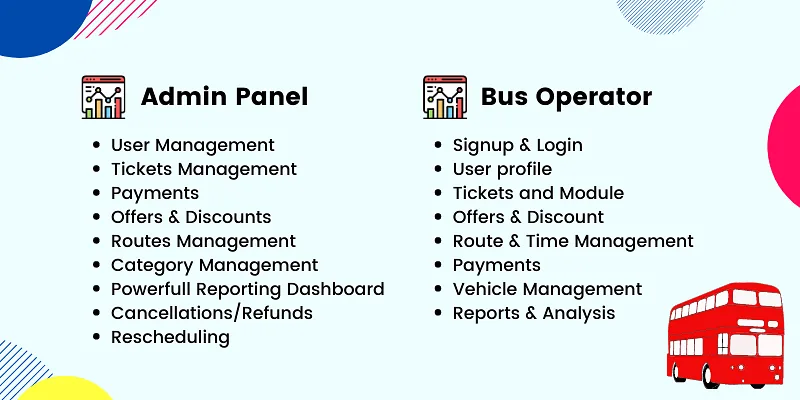
A fully functional admin panel is what separates a scalable platform from a basic booking app. Key capabilities include:
- Fleet management and route configuration: add, edit, and deactivate routes from a central dashboard
- Dynamic pricing control: adjust fares per route, season, or demand in real time
- Booking reports and revenue analytics: track occupancy, revenue per route, and operator performance
- Operator onboarding and commission management: manage multiple bus operators with automated commission calculations
- Passenger management and support tools: handle refunds, complaints, and escalations from one place
- Push notification management: send targeted offers, alerts, and schedule changes to users
Advanced Features of a Bus Booking App
1. Hire a Vehicle
Let users book a private bus, coach, or car for group travel. Search by trip type (one-way/round trip), number of passengers, and travel dates. This opens an additional high-margin revenue stream.
2. Pool Ride
Ride-sharing on long-distance routes helps users cut travel costs and increases seat fill rates for operators. This feature is particularly popular among budget travelers.
3. Sharing Travel Details
Allow users to share live trip details with family or friends. Real-time location sharing along booked routes adds a valuable safety layer that increases app trust.
Benefits of Bus Booking App
Building a bus booking platform creates value for both the end user and the platform owner. Here is what a well-built app delivers:
- Wide choice for users: Passengers can compare hundreds of buses across routes, operators, and price points in seconds, something no offline ticket counter can offer.
- Higher booking satisfaction: Seat selection, bus type filters, and boarding/drop location options mean users find exactly what they want, reducing complaints and refund requests.
- Real-time confidence: Live GPS tracking reduces missed buses and improves traveller trust in the platform, leading to stronger retention and word-of-mouth referrals.
- Lower payment abandonment: Multiple secure payment options UPI, cards, wallets meet users where they are and reduce checkout drop-off significantly.
- Faster sign-ups and repeat use: Social login removes the registration barrier on mobile, while referral programmes and wallet credits keep users coming back.
- Reduced support cost: AI chatbots handle a large portion of queries 24/7 without increasing your team size, directly improving your operating margin as you scale.
How AI is Transforming Bus Booking Apps in 2026
Artificial intelligence is no longer optional in travel apps. Here is how AI integration in bus booking apps drives both better user experience and higher revenue:
AI-Powered Chatbot Support
Natural language chatbots handle customer queries, booking modifications, and refund requests around the clock. Tools like GPT-based assistants can manage complex multi-turn conversations without human agents.
Smart Search and Personalization
AI algorithms analyze past booking behavior to surface personalized route suggestions, preferred seat types, and targeted offers, boosting conversion rates by 20 to 30%.
Dynamic Pricing Engine
Machine learning models adjust ticket prices in real time based on demand, time-to-departure, and historical patterns. This mirrors strategies used by airlines and is becoming standard in premium bus platforms.
Predictive Route Analytics
AI-driven demand forecasting helps operators plan routes and schedules more efficiently, reducing empty seats and improving profitability.
Fraud Detection
Real-time transaction monitoring powered by AI flags suspicious payment activity, protecting both the platform and users from fraudulent bookings.
Want AI capabilities built into your bus booking platform? Our AI/ML Development team can integrate these features from day one.
Why Choose OneClick IT Solution for Bus Booking App Development?
Building a bus booking app is a significant investment. You need a development partner with proven expertise in travel technology, not just a generalist app shop.
- 13+ years of travel technology development experience
- Delivered bus booking, hotel booking, and flight booking platforms globally
- Expertise in AI/ML integrations for travel apps
- Transparent pricing with no hidden costs
- Dedicated post-launch support and maintenance
Explore our Online Bus Booking Reservation System or our complete Travel Technology services to see what we can build for your business.

Frequently Asked Questions
How much does it cost to build a bus booking app like RedBus?
A basic bus booking app costs between $10,000 and $20,000. A full-featured app with AI chatbot, live tracking, and admin panel ranges from $45,000 to $80,000+. Costs vary based on features, platform, and team location.
How long does it take to develop a bus booking app?
A basic MVP takes 2 to 3 months. A mid-range app with live tracking and admin panels takes 3 to 5 months. A full platform with AI features typically requires 5 to 8 months.
What are the must-have features of a bus booking app?
Core features include: search and booking engine, seat selection, real-time GPS tracking, multiple payment options, e-ticket generation, ratings and reviews, and an admin panel for operators.
Which technology is best for building a bus booking app?
React Native or Flutter are ideal for cross-platform mobile development. Node.js or Python are recommended for the backend. Google Maps API handles GPS tracking, and Stripe or Razorpay cover payments.
Can AI be integrated into a bus booking app?
Yes. AI can power chatbot support, dynamic pricing, personalized recommendations, fraud detection, and demand forecasting. These features improve user experience and revenue significantly.
What is the best bus booking app development company in India?
OneClick IT Solution is a leading travel app development company in India with 13+ years of experience building bus booking systems, travel portals, and booking engines for global clients.